Labels

Showing posts with label cityrail. Show all posts

Sunday, 26 May 2019

Photo of the Week: Narrow-gauge Interurban Tram in Slovakia

TREŽ (Trenčinská Električka Železnica) 411 902-0 is a ČKD-built, 76 cm gauge railcar that operates on the interurban tram line between Trenčianká Teplá railway station on the Bratislava-Žilina-Košice mainline and Trenčianske Teplice, a renown bath resort. The line mostly runs next to the road or on the embankment of the creek and passes by scenes of different character: village, hilly countryside, Socialist-era blocks of flats and townhouses dating back to the Austro-Hungarian Monarchy. Trains only operate on selected weekend and are ran by the association TREŽ. The photo was taken during a photo charter at Trenčianske Teplice zastávka.
Learn more about the railway from my recent travelogue about narrow-gauge trams in Slovakia.

Friday, 26 April 2019

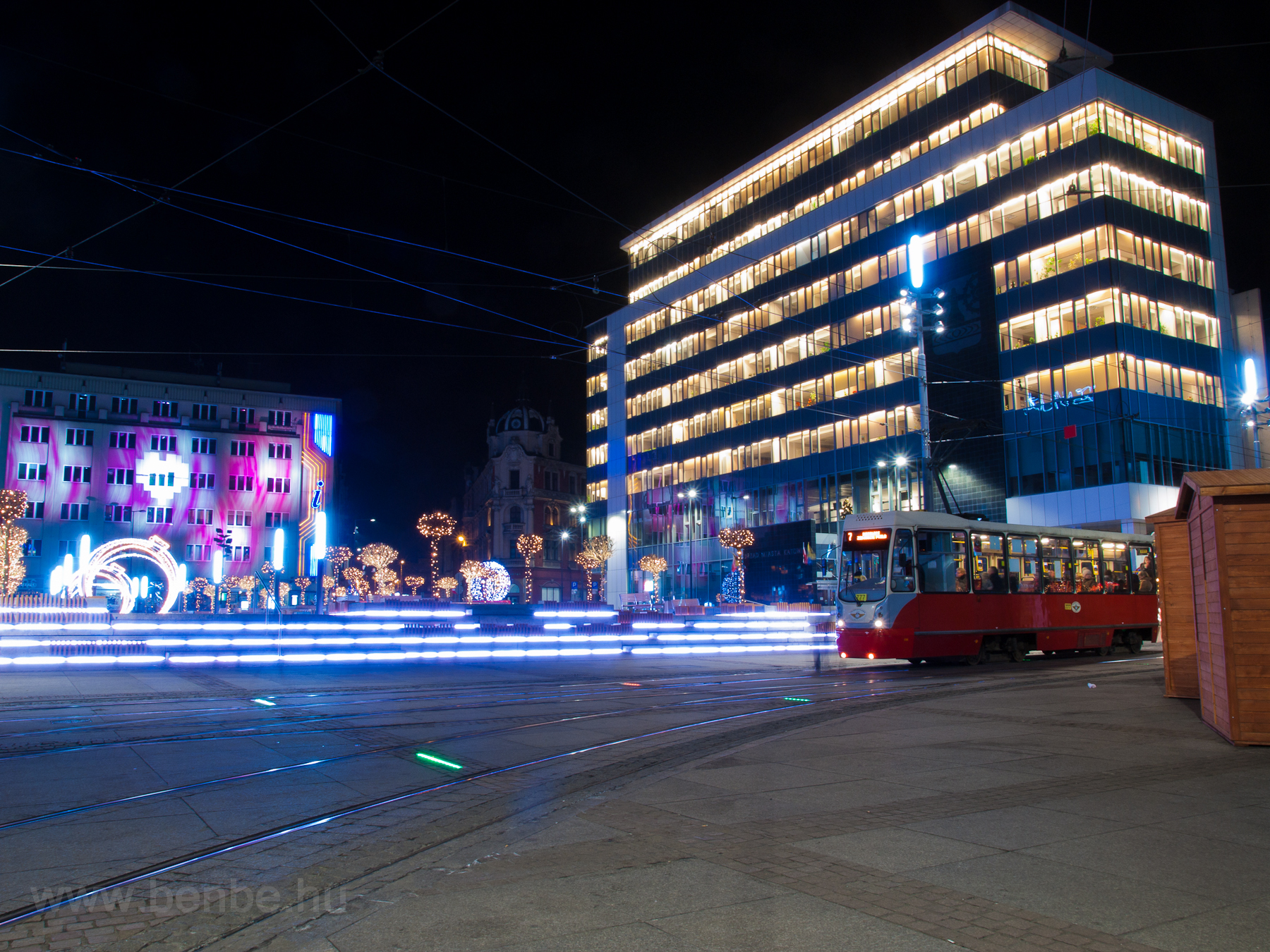
Tram 38 of Bytom

Okay, this should be a railway-related blog, but this is also a personal one, and this one was a personal interest for me, so here it comes. The Upper Silesian Interurbans may be something an enthusiast is familiar with, but do not be sad if you are not - people only get addicted to its intriguing story and unbelievable existence when they hear about it, but since it is an undisclosed secret of Poland, it is not easy to hear about it.

Poland had a complicated history, in some eras, the neighbouring nations simply split up its territory, so at the beginning of the 19th century Poland simply didn't exist: at the current area of Poland, Russia, the Habsburg Empire and Prussia has expanded its borders. Silesia had been a Prussian territory and the Germans made use of the coal to be found deep in this area, bringing economic growth to Silesia.

Friday, 29 March 2019

The ÖBB 4020 electric multiple unit from Austria

S-Bahn train in the tunnel under Wien Hauptbahnhof (Vienna Main Station)
The Austrian Federal Railways (ÖBB) had electrified many railway lines at the very early days of mainline electrification choosing the then most-advanced low-frequency alternating current system with 15 kV, 16 (2/3) Hz AC voltage. The federal capital Wien was reached by electric trains in 1952 as the main area for electrification had been the mountain passes. In those years Austria was still under Allied occupation with the capital being inside the zone controlled by the Soviet Union but the city itself split up into four control zones very similarly to those of Berlin. But while Berlin and Germany gradually shifted into an Eastern and Western part Austria was jointly run by the four allies and in 1955 given independence.
After that, the development of the city sped up and required the establishment of a commuter railway network which later incorporated various rail links inside the city and became the Vienna S-Bahn. The main vehicle on the S-Bahn became the ÖBB class 4030 electric multiple unit which had almost the same features as the subject of the present article, only being different in exterior design and the electric systems.