Labels

Friday, 26 April 2019

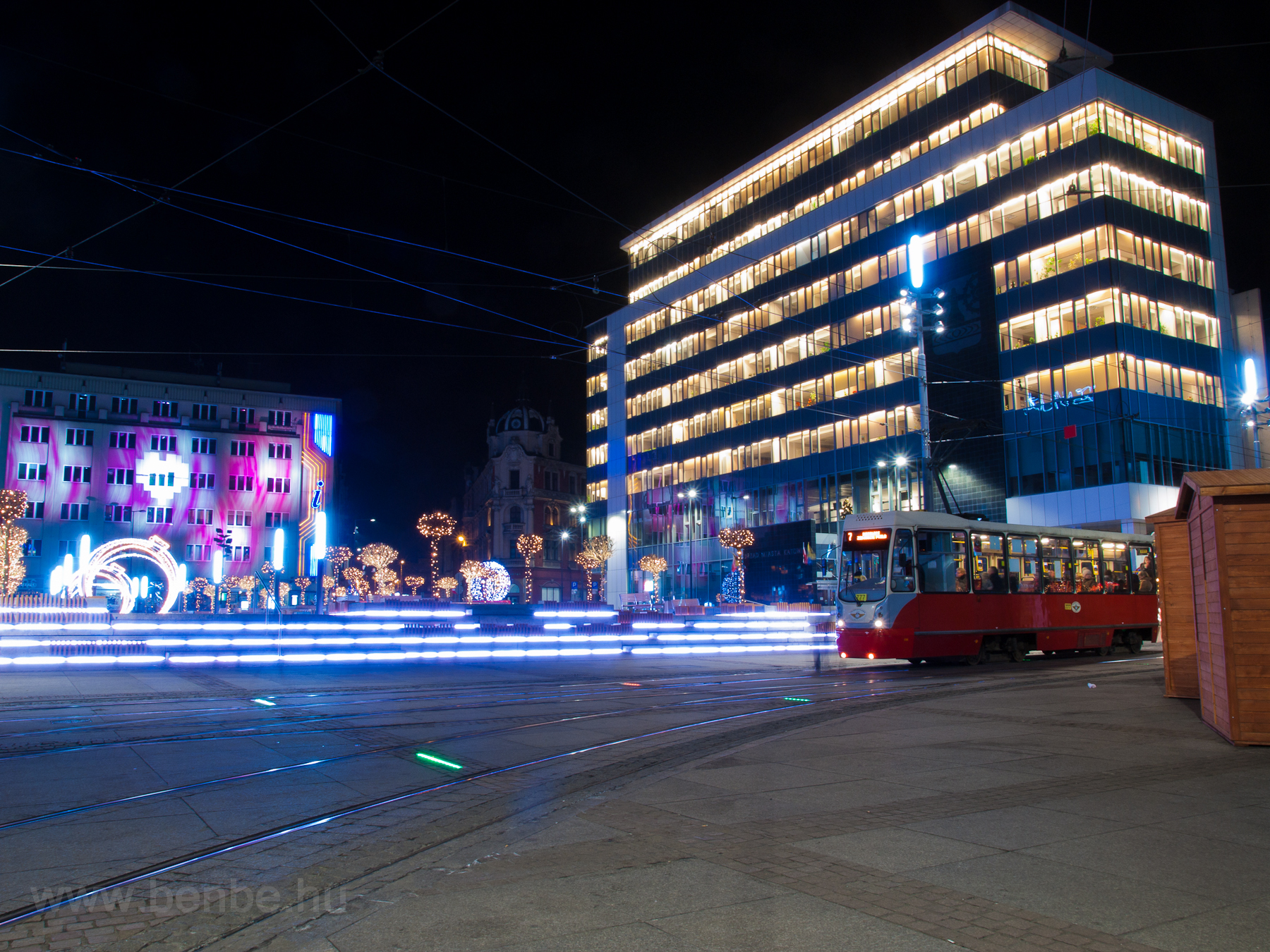
Tram 38 of Bytom

Okay, this should be a railway-related blog, but this is also a personal one, and this one was a personal interest for me, so here it comes. The Upper Silesian Interurbans may be something an enthusiast is familiar with, but do not be sad if you are not - people only get addicted to its intriguing story and unbelievable existence when they hear about it, but since it is an undisclosed secret of Poland, it is not easy to hear about it.

Poland had a complicated history, in some eras, the neighbouring nations simply split up its territory, so at the beginning of the 19th century Poland simply didn't exist: at the current area of Poland, Russia, the Habsburg Empire and Prussia has expanded its borders. Silesia had been a Prussian territory and the Germans made use of the coal to be found deep in this area, bringing economic growth to Silesia.
Tuesday, 23 April 2019

Photo of the Week: On the Train to Zakopane

The PKP ED 160-009 (type Stadler FLIRT3) electric multiple unit arrives in Chabówka, Poland as an InterCity train from Zakopane to Warszawa.
The Zakopane-Kraków railway in Souther Poland offers a connection to the resort in the High Tatras. Zakopane is popular both in the summer for its beauty and the hiking possibilities and in the winter for skiing and partying. The railway gets there in a curvy and long path which is worsened by the low speed because of lack of maintenance. Still it is the most comfortable and reliable way of getting there because of the traffic jams.

Wednesday, 17 April 2019

Photo of the Week: Frame of Flowers

This may look like just an ordinary flower-framed photo, but it was taken on the Budapest - Esztergom railway in Hungary which has since been completely rebuilt, and therefore this photo location at the boundary of Budapest and Urom does not exist anymore.

Friday, 5 April 2019

Photo of the Week: A Last Winter Photo from Grisons


Spring is already high in Europe but I wanted a last reminder of the beauties of winter before moving on. I am always looking forward to winter, snow and the glorious high contrast photos you can take in winter and four years ago we had enormous luck when heavy snow, a mostly clear sky and great trains in Graubünden, Switzerland, on the network of the Rhätische Bahnen (Rhetian Railways, a local, metre-gauge network in the Alps).
Visiting the RhB is always great but autumn and winter offer dramatic landscapes so a visit in those times is definitely recommended even though the days are short.
Additional photos

Friday, 29 March 2019

The ÖBB 4020 electric multiple unit from Austria

S-Bahn train in the tunnel under Wien Hauptbahnhof (Vienna Main Station)
The Austrian Federal Railways (ÖBB) had electrified many railway lines at the very early days of mainline electrification choosing the then most-advanced low-frequency alternating current system with 15 kV, 16 (2/3) Hz AC voltage. The federal capital Wien was reached by electric trains in 1952 as the main area for electrification had been the mountain passes. In those years Austria was still under Allied occupation with the capital being inside the zone controlled by the Soviet Union but the city itself split up into four control zones very similarly to those of Berlin. But while Berlin and Germany gradually shifted into an Eastern and Western part Austria was jointly run by the four allies and in 1955 given independence.
After that, the development of the city sped up and required the establishment of a commuter railway network which later incorporated various rail links inside the city and became the Vienna S-Bahn. The main vehicle on the S-Bahn became the ÖBB class 4030 electric multiple unit which had almost the same features as the subject of the present article, only being different in exterior design and the electric systems.

Sunday, 24 March 2019

Photo of the Week | The Schwarzatal-Viaduct

The Semmeringbahn is the world's first mountain mainline and a highlight of the European railway network. The whole line was designed to harmonize with nature and as such can be considered the first attempt to show that rail transportation is the green way to go. The route through the 898 m high Semmering Scheiteltunnel is soon going to start serving only the tourists after the opening of the new Semmering Base Tunnel (SBT). You should visit the Semmering Railway while it still has freight trains and railjet high-speed trains through the mountain pass.

Monday, 18 March 2019

Photo of the Week | The V43 at Exhibition

The V43 1110 is exhibited at the University of Óbuda, one of the most renowned districts of Budapest, Hungary and had replaced the V60,003 as a piece of exhibit by the University. The University has been named after Kálmán Kandó, developer of the 50 Hz railway electrification and the V60,003 on exhibit here had been one of the original Ganz-Kandó locomotives developed for the system. The locomotive has been moved to the Füsti - Hungarian Railway History Park and a more common class V43 locomotive has been brought in as a replacement. To date, this is the only V43 locomotive not only as an exhibit but anyway as all other surviving instances had been renumbered class 430, 431, 432 or 433.